
🌊 Overview: Deadly Flash Floods Hit the Northeast
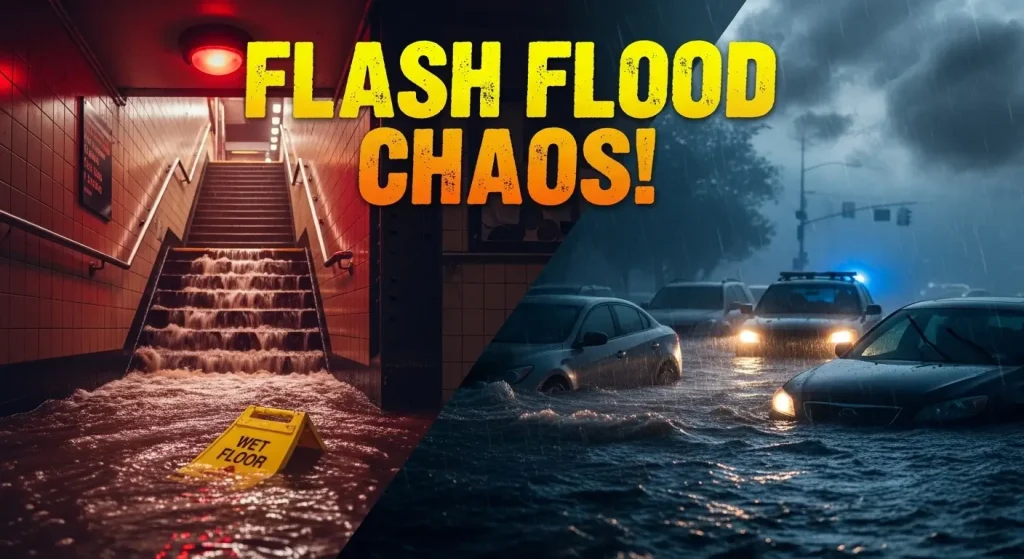
A massive weather system unleashed devastating flash flooding in New Jersey and New York on July 15, 2025, leading to at least two confirmed deaths and widespread damage across the region. Streets turned into rivers, subway stations filled with gushing water, and major highways became impassable.
The floods were triggered by sudden, torrential rainfall, catching many residents off guard and renewing concerns about the region’s preparedness for climate-driven weather extremes.
⚠️ What Caused the Flash Flooding in New Jersey and New York?
The flash flooding in New Jersey and New York was caused by an intense storm system that dropped more than 6 inches of rain in under two hours in some areas. In Union County, New Jersey, this sudden rainfall proved deadly when it swept away a vehicle in Plainfield, killing two women who were unable to escape in time.
In New York City, the rainfall shattered records. Central Park recorded over 2.3 inches of rain in just one hour, making it the second-highest rainfall total in city history for such a short time.
Meteorologists attribute this deluge to a “training” storm pattern, where multiple heavy cells pass over the same area repeatedly. Combined with urban infrastructure limitations, the result was catastrophic.
More Topic
World War 3: Which Countries Would Suffer the Most in a Global Conflict?
This Happy Gilmore Putter Is Amazing. Here’s Where You Can Get Yours
Enjoy Bastille Day in Northern Virginia with French Cuisine, Cocktails, and Celebrations
🚇 New York City: Subways Paralyzed by Torrents of Water
One of the most dramatic impacts of the flash flooding in New Jersey and New York was seen across New York City’s subway system.
Videos shared on social media showed:
- Water pouring like waterfalls down staircases
- Subway platforms waist-deep in water
- Riders stranded in stalled trains
The MTA (Metropolitan Transportation Authority) reported service disruptions on multiple lines, including the 1, 2, 3, A, E, F, M, and R trains. Engineers worked through the night to pump out over 16 million gallons of water using emergency drainage systems.
While service resumed on some lines the next morning, lingering delays frustrated commuters. Janno Lieber, MTA Chair and CEO, said in a statement:
“Our drainage systems were simply overwhelmed. These kinds of storms are no longer rare — they’re our new reality.”
🚗 Streets Turn to Rivers: Highways and Roads Shut Down
Beyond the subway system, the flash flooding in New Jersey and New York brought road transportation to a halt:
- Bronx River Parkway, Taconic State Parkway, and Saw Mill Parkway were closed due to standing water.
- In New Jersey, parts of Route 22 and Interstate 78 became impassable, trapping vehicles and triggering emergency rescues.
- Drivers abandoned their cars and climbed onto roofs and overpasses to escape the rising water.
Emergency crews responded to over 300 water rescues across the Tri-State area. Thankfully, the death toll was limited, but authorities warned that it could rise if missing persons remain unaccounted for.
🏚️ Impact on Homes and Businesses
The floodwaters infiltrated thousands of homes, especially in low-lying and underserved areas:
- Basements in Brooklyn, Queens, and the Bronx flooded within minutes.
- Small businesses in Manhattan’s SoHo and Chinatown districts lost inventory worth hundreds of thousands.
- In Newark and Elizabeth, New Jersey, hundreds of families were displaced overnight.
The American Red Cross opened multiple emergency shelters, and FEMA is assessing the situation for possible federal disaster aid.
📈 Flash Floods Are Becoming More Common — Here’s Why
The severity of the flash flooding in New Jersey and New York is part of a growing pattern:
- Warmer air holds more moisture, which leads to more intense rainfall.
- According to NOAA, events like this are now 4–5 times more likely than they were just 40 years ago.
- New York has averaged one “100-year storm” every two years since 2012.
Climate experts warn that aging infrastructure is no match for these new weather extremes. Stormwater systems, especially in older cities like NYC, were never designed to handle such rainfall rates.
🗣️ Government Response and Emergency Measures
🟠 New Jersey
- Governor Phil Murphy declared a state of emergency.
- He urged residents to avoid travel and warned of further flash floods with more rain in the forecast.
“We are experiencing storms that used to be once-in-a-generation — now several times a year,” Murphy said at a press briefing.
🔵 New York
- Mayor Eric Adams activated the city’s Emergency Management Office.
- Sandbag stations were opened in flood-prone neighborhoods.
- A weather alert app notified over 3.5 million residents to shelter in place.
Mayor Adams stated, “These floods are a warning — we need to invest faster in stormproofing New York City.”
🧱 Infrastructure Gaps: Why the City Wasn’t Ready
Despite years of warnings after Hurricane Ida (2021) and Superstorm Sandy (2012), both cities have struggled to implement needed upgrades:
- NYC’s $2 billion East Side Coastal Resiliency Project remains unfinished.
- Many stormwater catch basins are clogged or not maintained.
- New Jersey’s municipal flood plans are outdated or underfunded.
Experts argue that upfront investment in infrastructure could save billions in future damage and, more importantly, lives.
🔮 What’s Next: Forecast and Future Risks
More storms are forecast throughout the week, with an additional 2–3 inches of rain expected in some areas. The National Weather Service (NWS) has extended flood watches for NYC, Long Island, and Northern NJ through Thursday.
Residents are urged to:
- Sign up for emergency alerts
- Keep go-bags ready with food, water, and medical supplies
- Avoid basements and low-lying areas during rainstorms
Flash flooding in New Jersey and New York is no longer rare — it’s part of a new climate reality. Officials are calling for immediate climate adaptation funding and community resilience planning.


